

Learn WTAD 2025
Theme of the day: Be tsunami ready: Resilience starts with you
The 2026 World Tsunami Awareness Day (WTAD) theme is “Be tsunami ready: Resilience starts with you”.
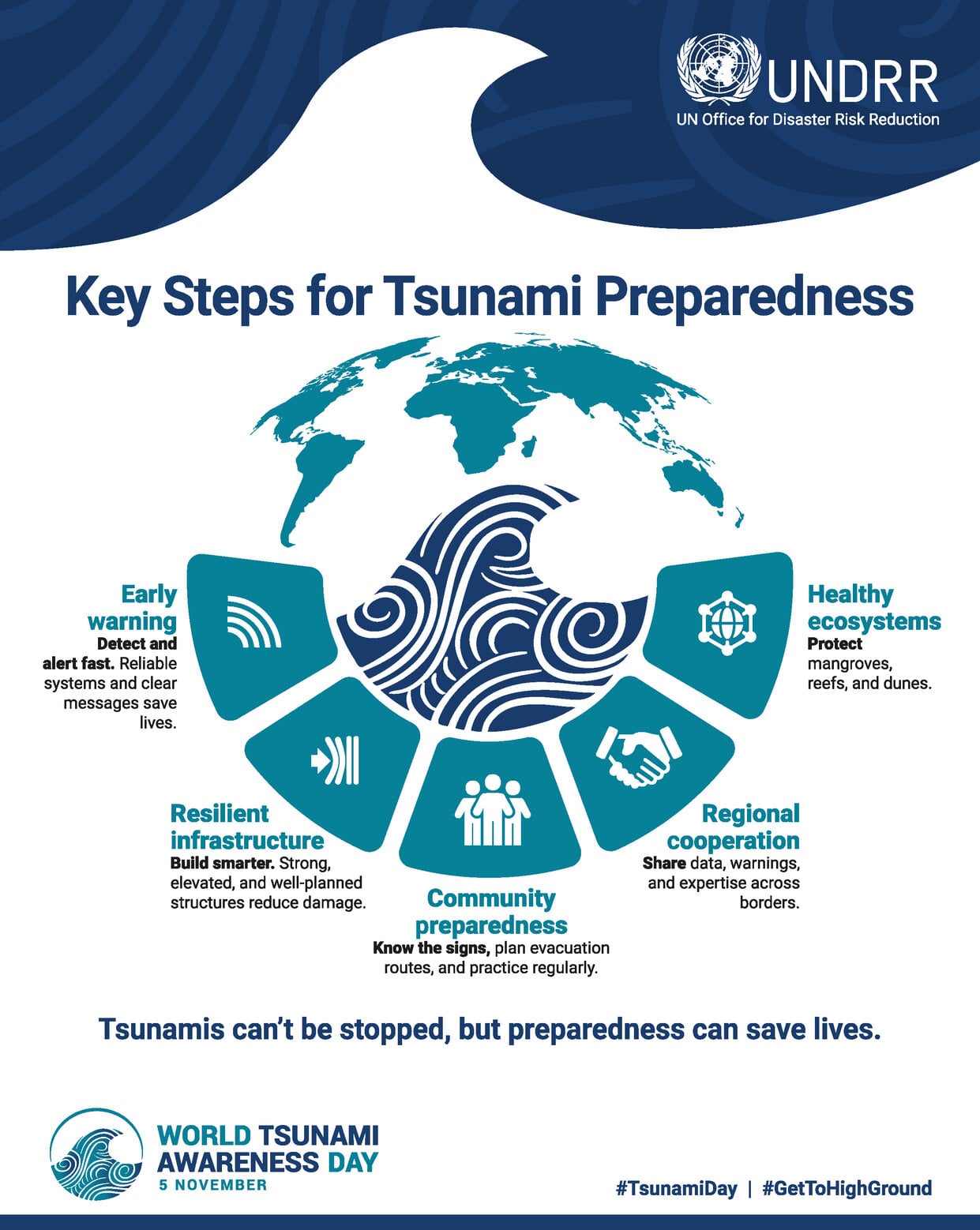
It builds on WTAD 2025’s emphasis on investment in preparedness by focusing on individual and community action. The theme supports global messaging on recognising natural tsunami warning signs, moving immediately to high ground or inland when needed, knowing local evacuation routes, preparing household emergency plans, taking part in community drills, and helping people who may require additional support, including children, older persons, persons with disabilities and tourists.
The theme aligns with the final stretch of Sendai Framework implementation to 2030, with the Early Warnings for All initiative, and with the continued expansion of the UNESCO-IOC Tsunami Ready Recognition Programme.
The Tsunami Ready Programme

The Tsunami Ready Recognition Programme is led by UNESCO-IOC. It is a voluntary, performance-based recognition initiative that promotes comprehensive tsunami preparedness at the community level. It encourages coastal communities to adopt mitigation measures that align with a standardized set of indicators. The programme contributes significantly to achieving the goal of the Sendai Framework of reducing disaster losses by promoting resilience-building measures that protect lives, livelihoods, and economies from the devastating impacts of tsunamis from all sources.
While being recognized as Tsunami Ready does not guarantee immunity from tsunami impacts, it signifies that a community has taken essential steps to minimize potential losses and protect its residents.
Play and learn to stop disasters

We are not powerless against tsunami. Instead, tsunami preparedness acts as both a public good and a sound economic strategy, through protecting lives and development gains. Use the Stop Disasters game this World Tsunami Awareness Day to see firsthand the actions needed to protect lives and development gains. In the tsunami hazard scenario, use the given time and budget to best protect your coastline, and discover the power we have to be tsunami ready.
Test your strategy in the Stop Disasters tsunami scenario: plan, protect, and prepare a resilient village before disaster strikes!
Facts and figures
1) The 2004 Indian Ocean tsunami remains the deadliest on record
More than 230,000 people died across 14 countries – a scale of loss that continues to inform global tsunami preparedness policy despite the hazard’s infrequency.
2) Preparedness education and drills save lives: the “Kamaishi Miracle” (2011)
Only 5 of approximately 2,900 elementary and junior-high students in Kamaishi City, Japan, died when the tsunami triggered by the Great East Japan earthquake struck. No child at school that day died, an outcome attributed to sustained tsunami education and frequent evacuation drills.
3) Early warning delivers a strong return on investment
Global analysis estimates US$4–36 billion in annual benefits for roughly US$1 billion invested each year in modern early warning, including approximately 23,000 lives saved annually.
4) Universal warnings cut losses
Providing universal access to early warnings for storms, floods and tsunamis can reduce asset losses by up to 20%, preventing about US$13 billion in damage annually, with well-being gains of around US$22 billion per year.


