
Get to High Ground
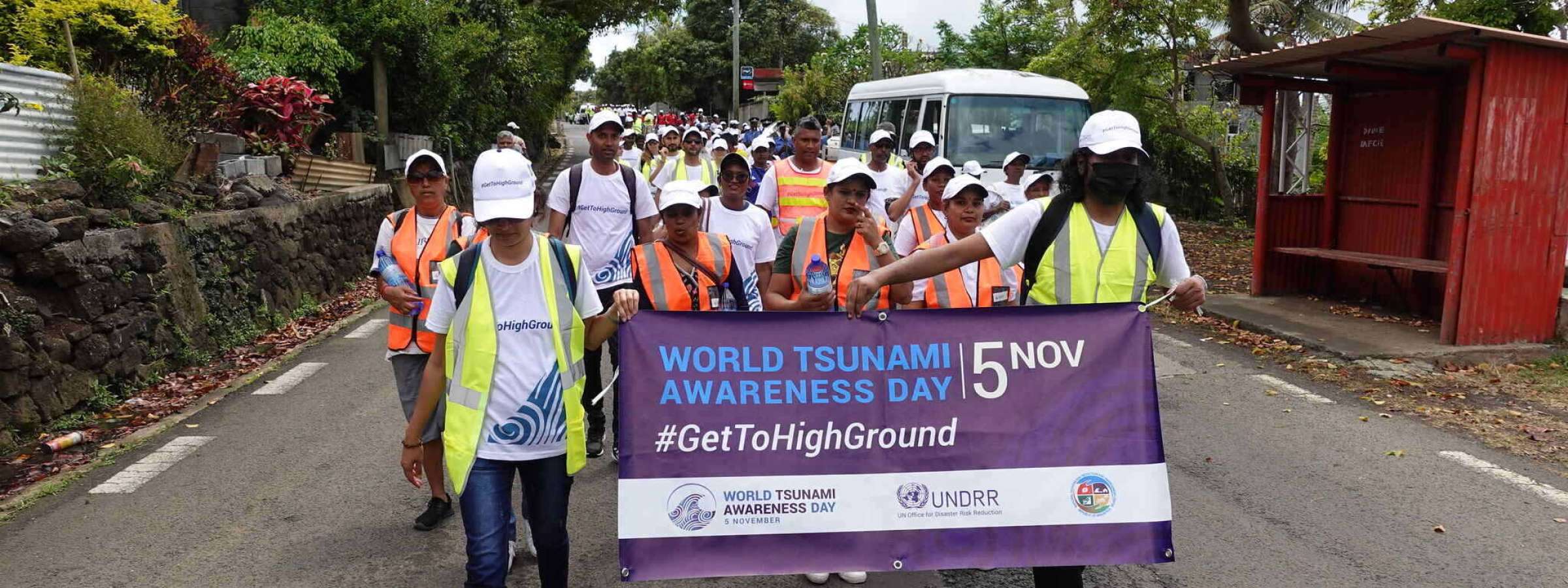
How can I join #GetToHighGround?
Mark World Tsunami Awareness Day on 5 November with a drill, a run or a walk along a tsunami evacuation route.
Organize an event in your community, or connect an event you already have planned to the #GetToHighGround initiative.
The events are an inclusive and engaging way to involve all people in raising tsunami risk awareness.
What is the #GetToHighGround initiative?
A call for a culture of tsunami and coastal hazard awareness for all people at risk.
In December 2015, the UN General Assembly designated 5 November as World Tsunami Awareness Day (WTAD). Since 2016, advocacy around the day has called on countries, international bodies and civil society to raise tsunami awareness and share innovative approaches to risk reduction.
In 2022, UNDRR launched the #GetToHighGround campaign to activate citizens through participation in a drill, a run or a walk along tsunami evacuation routes. These activities raise awareness about reducing tsunami risk while helping communities to prepare their own tsunami resilience. See simulation exercises (SIMEX) as examples of preparedness activity.
The campaign also emphasizes the importance of understanding our risk and investing in action that both reduces risk and prepares us for future tsunami and coastal hazards.
Tsunamis must be treated as multi-dimensional hazards: they threaten human life, but also disrupt livelihoods, industry, agriculture, gender equality and critical services such as education and healthcare.
These cascading risks can reverberate across sectors, geographies and societies. Access to high-quality, readily available information is key to supporting national mechanisms and local preparedness, and to enhancing awareness about early warning systems.
Who can take part?
Governments, organizations and communities: everyone with a stake in a culture of early warning and early action.
We invite partners including national, regional and local governments, international organizations, the UN system, non-governmental organizations and all relevant stakeholders to contribute to building a culture of early warning and early action, and to raise awareness on tsunami preparedness.
Organize a drill
Run a tsunami evacuation drill tailored to your local context, so people know the way to safety before they need it.
Run or walk your route
Hold a fun run or walk along your tsunami and coastal risk evacuation route.
Connect your event
Already have an event or activity? We warmly invite you to connect it to #GetToHighGround.
Whichever you choose, citizens and communities who take part help to further enhance the preparedness of coastal communities for tsunamis.
What is in the activation toolkit?
Ready-made assets to organize your event and join the #GetToHighGround initiative.
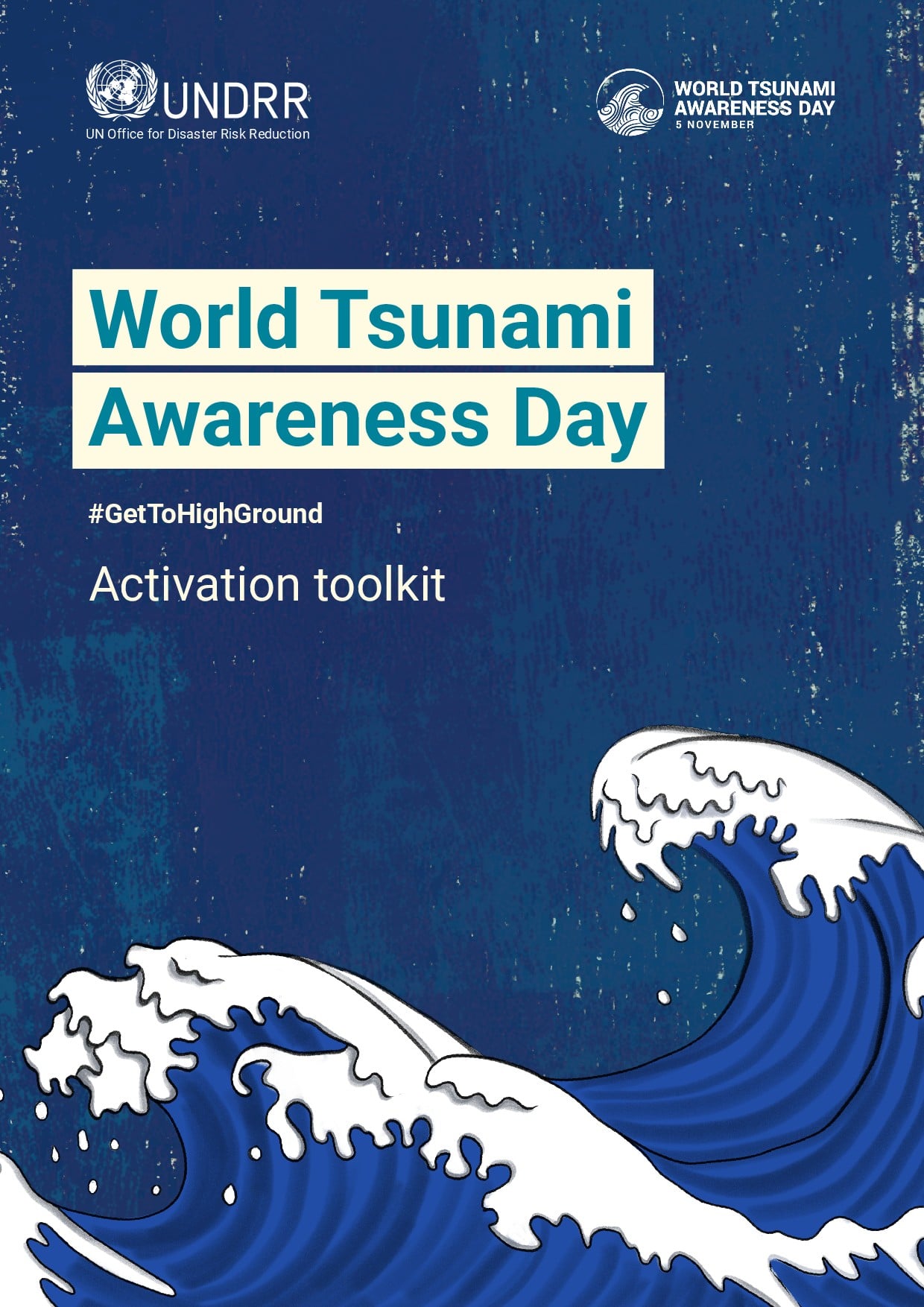
The toolkit includes:
- Key facts on tsunami risk, customizable to your local context
- Customizable social cards to promote your event
- A downloadable social card template for participants to share, showing they took part
- A customizable poster to promote your event
- A customizable pamphlet on tsunami risk, with space to insert your tsunami or coastal risk evacuation route
Need print-ready design files for t-shirts, mugs, pens or other promotional products? Contact the campaign team.
Why does early warning matter?
Early warning saves lives and money, yet one in three people is still not covered.
24 hours of early warning can cut the ensuing damage by 30 per cent.
Investing US$800 million in early warning systems in developing countries would avoid losses of US$3–16 billion per year.
One third of the world’s people, mainly in least developed countries and small island developing states, are not covered by early warning systems. In Africa, 60 per cent lack coverage.
Countries with limited early warning coverage have disaster mortality eight times higher than countries with substantial to comprehensive coverage.
Warnings only save lives when people act on them: every #GetToHighGround event builds the awareness that makes early warning systems work.
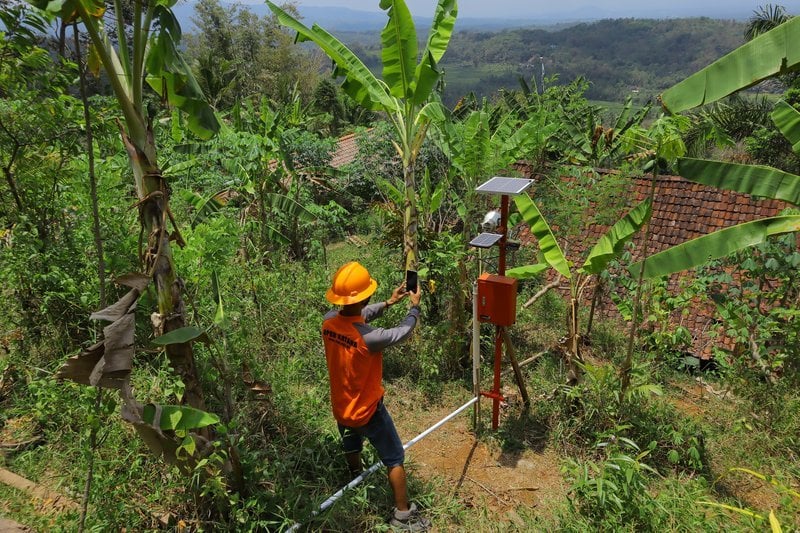
Support early warnings and disaster preparedness
Hazards may be inevitable, but their disastrous impacts are not.
There’s nothing natural about disasters. Contrary to popular perception, we are far from powerless in the face of earthquakes, tsunamis, cyclones and pandemics. We can curb their devastating power by understanding their interrelated risks, setting up early warning systems and investing preemptively.
Every contribution makes a difference.
Related pages on UNDRR
Go further on tsunami risk, early warning and preparedness.