
Chile puts tsunami preparedness into practice as 328,000+ join a region-wide evacuation drill
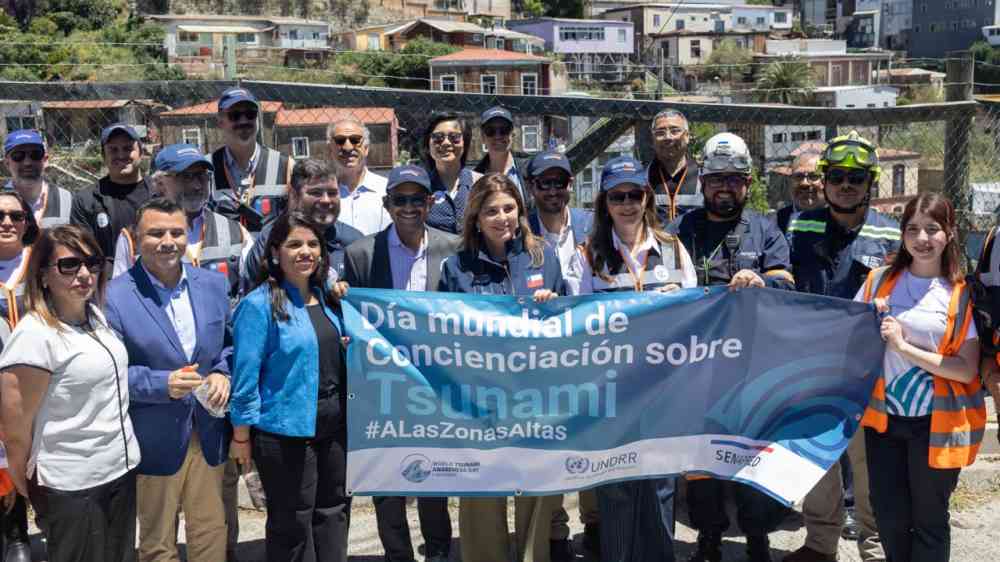
Chile’s central coast can receive tsunami waves a short time after a large earthquake offshore, so schools and communities need to know in advance how to reach safe ground.
The Peru–Chile Trench lies about 160 kilometres off Chile’s coast. Along it, the Nazca Plate moves beneath the South American Plate at about 6 centimetres a year. This subduction zone has produced many great earthquakes, including a magnitude 8.0 earthquake near Valparaíso in 1985.
This means Valparaíso is also exposed to large tsunamis . In 1730, an earthquake estimated at between magnitude 9.1 and 9.3, centred about 10 kilometres north of the port, was felt in Iquique in the north and Osorno in the south. It damaged Valparaíso, Santiago, La Serena and Concepción – the country’s four largest cities – and generated a destructive tsunami along the coast of central Chile.
More recently, the 2014 Pisagua and 2015 Illapel earthquakes showed how quickly tsunamis can follow seismic events. Researcher Patricio Catalán of Chile’s Research Centre for Integrated Disaster Risk Management (CIGIDEN) said the first tsunami waves reached the shore less than 15 minutes after these earthquakes.
Safety relies on readiness
When warning time is short, safety depends on people already knowing where to go and how long it takes to get there. Evacuation drills build that knowledge. They test whether plans work in practice, measure evacuation times and show where plans need to change.
Nahuel Arenas Garcia, Chief of UNDRR's regional office for the Americas and the Caribbean, said that disaster preparedness was a priority throughout the region, especially for rapid-onset hazards like tsunamis and earthquakes.
"The Americas and Caribbean region includes many of the world's most seismically active areas, such as in Chile, Mexico and Peru," he said.
"Seismic events happen with little warning, so being prepared to take rapid action can significantly reduce risks. Regular drills like this one help individuals and communities respond in a timely, effective way when the hazard strikes."
CIGIDEN researchers said drills can familiarise communities with the hazard, which supports timely evacuation and reduces casualties.
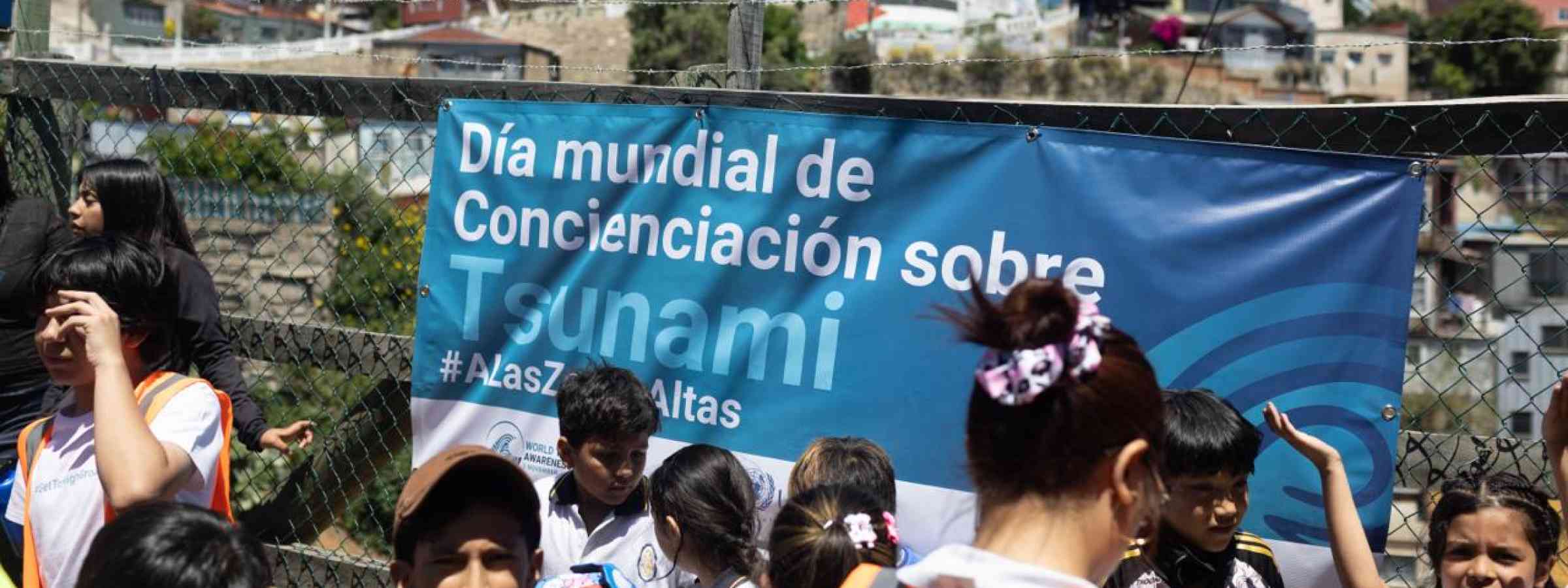
The education sector in Chile’s Valparaíso region applied this approach on 5 November 2026, World Tsunami Awareness Day, when more than 1,000 kindergartens, schools and higher education institutions took part in an earthquake and tsunami evacuation drill.
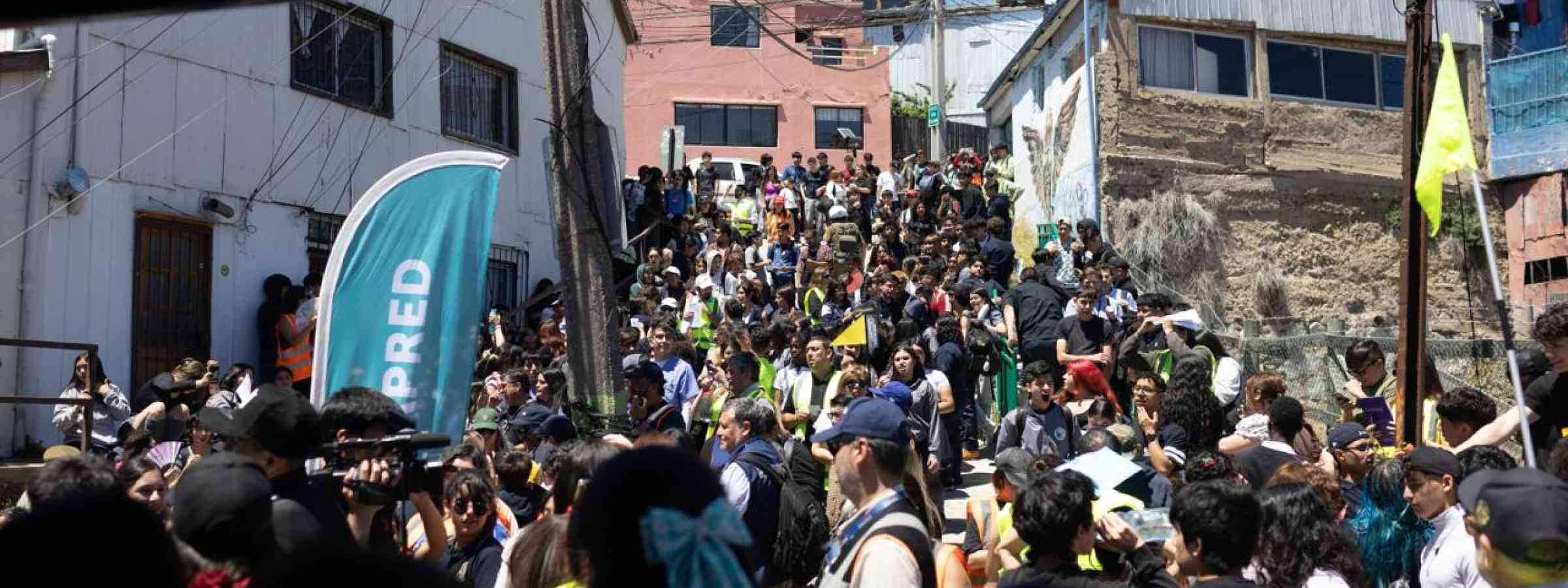
SENAPRED, Chile’s National Service for Disaster Prevention and Response, organised the drill with the regional education secretariat. At 12:30 the exercise began, with the schools sounding bells, buzzers and megaphones for two minutes as a stand-in for an earthquake. Establishments in the coastal zone then evacuated to the meeting points set out in their safety plans. Those further inland – outside of the tsunami zone – weren’t left out: they practised their earthquake response.
Early warning is only as strong as its last link
A CIGIDEN study of drills at four schools in Valparaíso and Viña del Mar found that a quick start to evacuation allows every student to reach safety.
Distant earthquakes allow more time. When, in July 2025, a magnitude 8.8 earthquake off Russia’s Kamchatka Peninsula triggered tsunami alerts, around 1.5 million people evacuated Chile’s coast, according to SENAPRED.
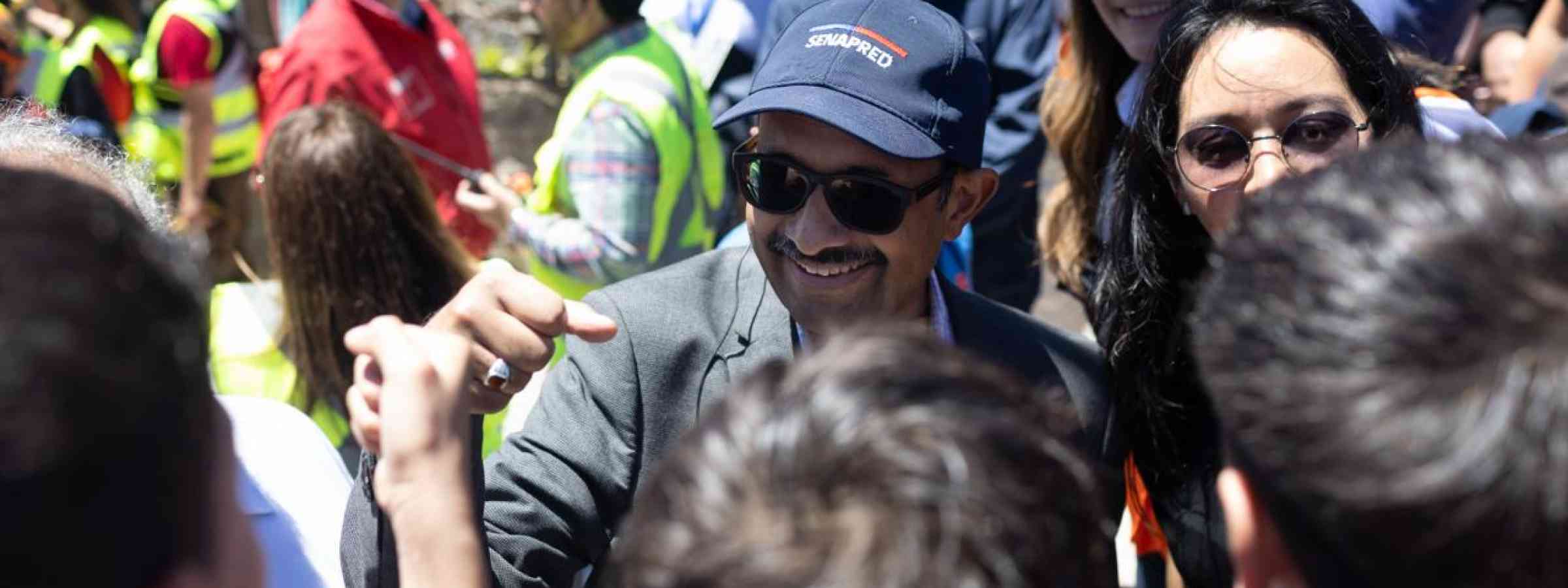
Kamal Kishore, Special Representative of the UN Secretary-General (SRSG) for Disaster Risk Reduction, joined the Valparaíso drill, having visited the National Tsunami Warning System run by the Chilean Navy Hydrographic and Oceanographic Service (SHOA) earlier that week.
“Effective early warning is a chain, and it is only as strong as its last link,” Kishore said in a LinkedIn post after the drill.
“But their warnings save lives only if they reach people in time – and those people know how to act. Drills like yesterday’s are where that last link is tested, measured, and improved.”
Prompt arrival in the safety zone
According to SENAPRED, 328,329 people took part, including 278,286 students.
“Our records show that the first schools were arriving at their safe zone between 10 and 15 minutes in,” said Christian Cardemil, SENAPRED’s regional director in Valparaíso. “Within the first 27 minutes we had all the establishments in the region already at their meeting points, in their safety zones”.
In Valparaíso city, Kishore, SENAPRED’s national director Alicia Cebrián, and regional officials attended the evacuation of a local high school, Liceo Mixto Polivalente Matilde Brandau de Ross.
“We reached the high ground well within the advised time,” Kishore said. "It was great to see students of all ages responding enthusiastically and in an orderly fashion.”
In Petorca province, in the north of the region, close to 10,000 students and 1,800 teachers and support staff took part. Organisers there added more complex scenarios, including a simulated structural fire at the Escuela de La Vega and a damaged staircase at Liceo A-2. These scenarios tested how schools would respond to difficulties during an evacuation.
“These exercises allow us to identify critical issues, correct them, and move toward better preparedness,” said Andrés Soza, Petorca’s provincial presidential delegate.
Rosario Pérez, the regional government secretary for Valparaíso, said that persons with disabilities, including students, took part in their thousands. Their participation is “very important because it allows us to improve response times”, she said.
Test, measure, and improve
More than 1,000 evaluators observed the drill across the region, measuring travel times and assessing the response of local authorities, emergency services and the wider community. SENAPRED will use their findings to prepare a final report on strengths and gaps in emergency planning.
Each school’s evacuation follows its Comprehensive School Safety Plan (Plan Integral de Seguridad Escolar, PISE).
“The Comprehensive School Safety Plan is a living instrument, a management tool that leadership teams and school communities have,” Juan Carlos Klenner, the regional education secretary, said before the drill. “Practical tests of this kind make it possible to put it to the test, and to assess response times and the different roles the community takes on.”
This was the region’s third earthquake and tsunami drill for the education sector. It forms part of SENAPRED’s Chile Preparado programme, which has trained around 15 million people in preventive evacuation since 2010.
Valuable lessons for coastal communities
“Few countries combine such high exposure with an equally strong spirit of participation,” Kishore said.
“Chile’s experience offers valuable lessons for coastal communities across the Americas and the Caribbean, and around the world.”
The theme of this year’s World Tsunami Awareness Day is “Be Tsunami Ready: Resilience starts with you”.
“Governments must lead the way by investing in resilient coastal infrastructure, risk-informed land use, and multi-hazard early warning systems,” UN Secretary-General António Guterres said in his message for the Day.
“But every person, every family and every neighbourhood in tsunami-prone areas also has a vital role to play,” he said.
In Valparaíso, schools, families and public institutions share responsibility for preparedness and work together so that every student reaches safe ground, and no one is left behind. The evaluators’ report will show where schools can shorten evacuation times further, providing valuable insights that will save time and lives if a tsunami hits the region.
“I believe this is the best investment we can make – raising awareness and enabling our children to protect themselves,” Kishore said.
Quotes from Chilean officials are unofficial translations from Spanish.