Tsunamis can be deadly, but they needn’t be. Early warning and early action are effective tools to protect people, saving lives, and preventing the hazard from becoming a disaster. To be effective, tsunami early-warning systems must cover every at-risk person, they must be multi-hazard, and communities must be prepared so they can act quickly.

WTAD news and publications

News

Impact of the Great East Japan Earthquake and tsunami
Research briefs

A small Japanese fishing community managed to recover from the disaster through cooperative community activity.

Tohoku University 東北大学
Waves crash on the rocky coast of Lake Superior at Michigan's Pictured Rocks National Lakeshore in autumn (USA)
Update

The first extensively documented air pressure–driven meteotsunami on one of the Great Lakes presents an opportunity to use existing weather models to predict them.

Eos - AGU
Pacific Northwest Geodetic Array, Central Washington University
Research briefs

Researchers have developed a global earthquake monitoring system that uses the Global Navigational Satellite System (GNSS) to measure crustal deformation.

Seismological Society of America
Impact of the Japan tsunami in 2011
Update

Ian McKinley, Shinichi Nakayama and Susie Hardie consider how recovery has progressed at Fukushima Daiichi and what lessons can be learned for the future

Nuclear Engineering International
Tsunami Ladies
Update

Resilience can be created anywhere - even at the kitchen table. For six women from Chile and Japan who survived the massive tsunamis that devastated their villages, food played a vital role in helping their communities rebuild and recover. In the

United Nations Office for Disaster Risk Reduction – Regional Office for the Americas and the Caribbean
António Guterres UN Secretary-General
Statements and messages

MESSAGE OF THE UN SECRETARY-GENERAL FOR WORLD TSUNAMI AWARENESS DAY, 5 NOVEMBER We live in a multi-hazard world where risk is systemic and embedded in the very fabric of human development. Currently we are struggling with what some describe as a tsunami

United Nations Office for Disaster Risk Reduction (UNDRR)
Report cover
Press release

GENEVA, 12 October 2020 – A UN report published to mark the International Day for Disaster Risk Reduction on October 13, confirms how extreme weather events have come to dominate the disaster landscape in the 21 st century. In the period 2000 to 2019

United Nations Office for Disaster Risk Reduction (UNDRR)
UNDRR Hazards Report Cover
Statements and messages

Statement by the head of UNDRR, Mami Mizutori at the launch of the UNDRR-ISC Technical Report on Sendai Hazards Definitions and Classifications It is my pleasure to welcome you all to the launch of the UNDRR-ISC Technical Report on Sendai Hazards

United Nations Office for Disaster Risk Reduction (UNDRR)
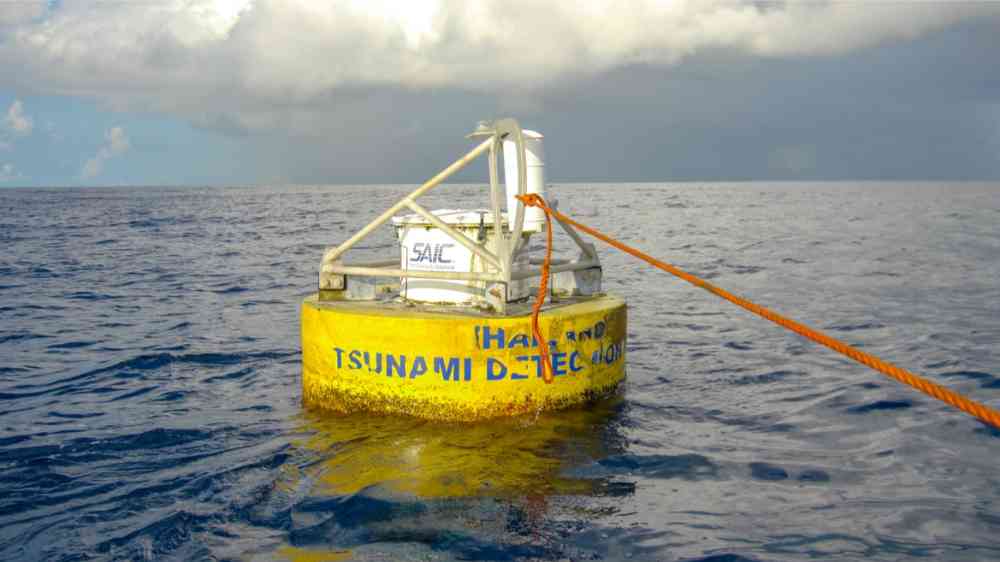
Tsunami detection buoy floats in the Andaman sea, India (2018)
Update

Five countries pave the way for progress in the implementation of effective tsunami early warning systems, which are challenging due to multi-faceted complexity.

United Nations Office for Disaster Risk Reduction (UNDRR)
Tsunami early warning system in the sea
Update

The best emergency plans need to be comprehensive yet simple. Including early warnings, safe areas, and escapes routes in your tsunami escape plan is essential.

United Nations Office for Disaster Risk Reduction (UNDRR)

Publications

No results found!